
self-defense
Self-Defense for Kids: The Smallest Part Is Fighting Back
7 min read
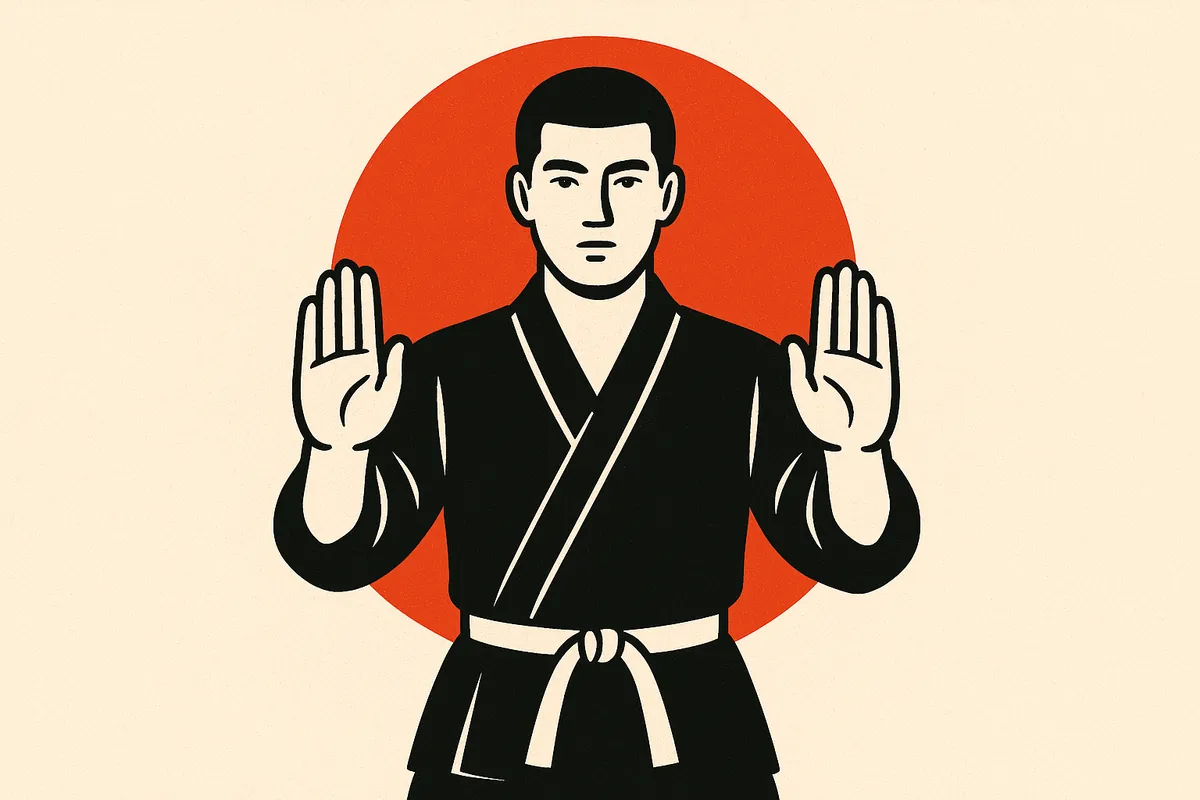
The picture most families have is a child doing something dramatic to an adult. The part that works is quieter: noticing, a loud voice, distance, and a person who is told. Here is where the physical technique honestly fits.
Parents ask me this in the parking lot, usually quietly, often while a child is out of earshot: does this actually teach my kid to defend themselves? It is a fair question and it deserves a straight answer. The straight answer starts somewhere nobody expects. It starts with a child noticing where the door is.
The picture most families carry into a martial arts school is a small child doing something dramatic to a large adult. The part that genuinely works is much less cinematic: awareness, a loud voice, distance, and an adult who is told what happened. The physical technique is real, we teach it properly, and it is the smallest piece of the whole thing. Here is what the rest of it looks like in a class, and what it honestly will not do.
The first thing we teach is noticing
Awareness is a habit before it is a skill, and in class it starts small. Know where the edge of the mat is. Know who is behind you in line. Notice when the group has moved and you have not. Games do most of the teaching, because a game is the easiest way to make a child move while paying attention to something other than their own feet.
A child who spends an hour a week tracking where other people are gets measurably better at noticing, and noticing is most of what keeps a person out of a bad situation in the first place. The practical version is unglamorous: head up, eyes out, walking like you know where you are going. Not scanning the world for threats. Just not moving through it while staring at your shoes.
A voice is a technique, and it takes practice
Most children have never once shouted at an adult. That is not a defect — it is what we spent their childhood teaching them. So asking a child to produce a loud, firm voice in a frightening moment, having never done it in a safe one, is asking for equipment they do not have.
Which is why the voice gets trained every week, out loud, in front of other people: counting, answering an instructor across the room, the shout that goes with a technique. The words we rehearse for a bad situation are short — no, stop, back away. Loud, flat and pointed at the person. Not a speech, not an explanation, not an argument. The point is not to reason with anyone. The point is to be heard by whoever else is nearby.
A loud voice also does something on the inside. It interrupts freezing. That is why it is practised at volume and not discussed at length: a child needs the sound to be available to them, and availability comes from repetition.
Distance beats everything else
The best outcome of any bad situation is that a child is not in it. That means stepping back, stepping off the line, and leaving. Running away is not losing — in the situation the training is for, running away is the win, and a child should know that before they ever need it.
In class the movement is drilled as a step out of the way rather than an exchange of blows, and the thing that always comes straight after it is the same: go, and go toward people. This is why a self-defense class can look strange to a parent watching from the chairs — it is mostly footwork and space. A block that stops the first thing counts for something. The step that takes the child out of reach counts for more, and it is what gets repeated.
The technique is the smallest part. The voice, the distance and the person they tell are what change the outcome.
Telling someone — with a name attached
“Tell a trusted adult” is a sentence children agree with cheerfully and then fail to act on. The blocker is almost never not knowing what to do. It is the belief that they will be in trouble, that it was somehow their fault, or that no one will believe them. Those beliefs are not removed by a poster. They are removed by an adult saying the same plain thing, again and again, in different words: telling is never the thing you get in trouble for. Not telling is what lets a thing continue.
So we make it concrete. A child picks two adults they could reach in under a minute — a parent, a teacher, a coach, the person working at the front of a shop — and says their names out loud. A named person is reachable. “An adult” is a phrase.
The same rule has to hold at home. If a child brings you something small and receives a big, alarmed reaction, they learn what a big reaction costs, and next time they say nothing. Staying level on the small things is how a child decides you are someone they can bring a large one to.
Where the physical part fits, and how small it is
The honest version: a child cannot out-fight an adult, and any school implying otherwise is selling confidence it cannot deliver. What the physical training is actually for is narrower and far more useful — break a grip, make a second of space, get the voice out, and move. That is the whole job. The strike exists to make the escape possible, not to win anything, and a child who understands that is better protected than one who thinks the answer is a fight.
That is also why it is taught in a room with rules, partners and control rather than as a list of moves a child is expected to summon from memory under pressure. Repetition under mild, safe pressure is what makes any movement available at all.
What I will not promise you
I cannot promise that a child who trains with us will be able to stop someone who intends them harm. Nobody can promise that, and a school that does is telling you something about its standards. A martial arts class is not a supervision service either. The adults in a child's life are still the main safety system, and that is how it should be.
I also will not teach fear to get enrolments. Children who are told the world is full of people who want to hurt them do not become safer — they become anxious, and anxiety makes a child easier to isolate, not harder. The aim is a child who trusts their own notice, can make a sound when it matters, and knows that the people around them will take them seriously.
The same spine in the adult classes
The women's fitness and self-defense classes run on exactly this spine: awareness first, voice second, distance third, escape always. Adults get more detail in the physical work, because an adult body can do more and an adult has more strength to use. The priorities do not change at any age. Anyone who has sat in one of those classes will recognise everything in this article — it is the same lesson at a different size, and it is deliberately the same lesson a seven-year-old gets.
Talking about it at home without frightening them
Keep it short, keep it specific, and do it sideways — in the car, one question at a time. What would you do if someone you did not know asked you to come over to their car? Let them answer. Add one thing they missed. Then stop. If the topic turns into a lecture, the child learns that this subject is frightening; if it stays a conversation, they learn that they have options.
End every one of those conversations on agency: what they would do, and who they would tell, and that you would be on their side whatever they brought you. That last part is not a footnote. It is the part that makes all the rest of it work.
Kids, teens and adults train at the same academies, on the same floor, so a child who starts at seven can keep going until they are the teenager holding the pad for someone smaller. Our Tyler academy and the Gilmer academy run the same classes, and the Mineola academy covers the western side of the county. If you want the fuller picture of what training builds over years rather than in one evening, the benefits page has it.
The best time to give a child a loud voice and a habit of noticing is long before either is needed. Book a free trial class and watch an hour of it, or call 903-494-7040 and ask an instructor directly how the awareness work is taught.
Published · ProComp Sport Martial Arts
← All articles